The short answer
For healthy adults doing resistance training, total daily protein intake matters, but “more” is not unlimited.
More protein can support muscle growth when you resistance train — but the benefit does not keep rising forever.

For healthy adults doing resistance training, total daily protein intake matters, but “more” is not unlimited.
Protein supplies amino acids used to repair and build tissue, but resistance training provides the primary stimulus for muscle growth.
A meta-analysis of 49 studies found that protein supplementation modestly improved resistance-training gains in muscle size and strength.
For healthy adults doing resistance training, total daily protein intake matters, but “more” is not unlimited. A widely cited meta-analysis found that gains in fat-free mass did not continue to increase beyond about 1.6 g/kg/day on average.
Protein supplies amino acids used to repair and build tissue, but resistance training provides the primary stimulus for muscle growth. Simply raising protein without progressive training is not the same strategy.
A meta-analysis of 49 studies found that protein supplementation modestly improved resistance-training gains in muscle size and strength. The analysis estimated a plateau around 1.62 g/kg/day for fat-free-mass gains, while acknowledging individual variation and uncertainty around a single exact cutoff.
Build a consistent resistance-training program first, then make sure your overall diet contains enough protein. Spreading meaningful protein servings across meals is a practical way to reach a daily target without turning every snack into a protein product.
No. Powder is a convenient food product, not a requirement. Dairy, eggs, fish, poultry, meat, soy foods, beans, lentils and other foods can all contribute. A supplement can simply make the target easier when food alone is inconvenient.
Chasing the highest possible protein number is unlikely to keep adding muscle once intake is already sufficient. It can also crowd out fiber-rich foods and other nutrients if the entire diet becomes protein-focused.
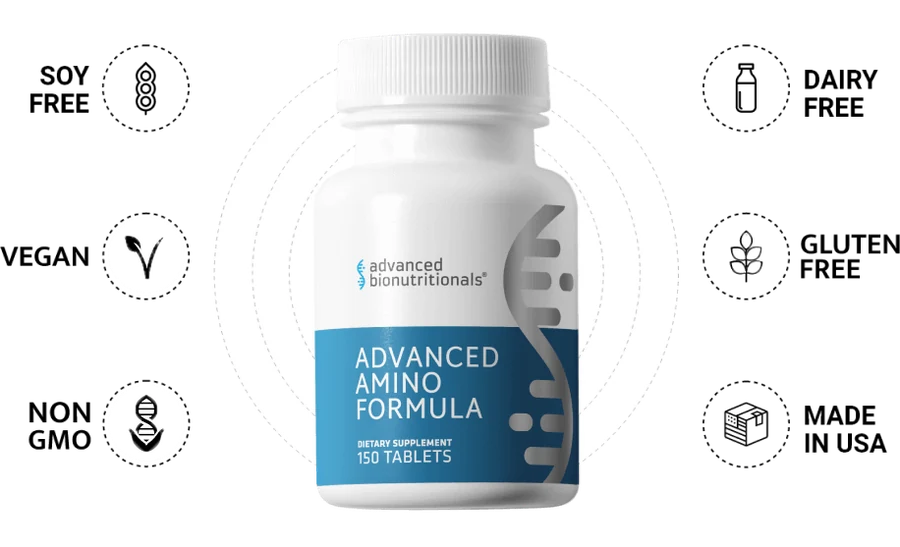
Essential amino acids participate in muscle protein synthesis, but supplements are not a replacement for adequate dietary protein or resistance training.
EXPLORE ADVANCED AMINO FORMULAHow Much Protein Do You Actually Need to Build Muscle?
For healthy adults doing resistance training, total daily protein intake matters, but “more” is not unlimited. A widely cited meta-analysis found that gains in fat-free mass did not continue to increase beyond about 1.6 g/kg/day on average.
The evidence applies to the specific outcome and population reviewed here; individual results and circumstances can differ.
Supported
If you resistance train, getting enough protein helps — but maximizing protein is not the goal. A practical evidence-based target for many healthy lifters sits around the range where needs are met, with roughly 1.6 g/kg/day often used as a useful reference point rather than a mandatory number for everyone.
Ask a question or share your experience.
Needs vary with body size, total diet and training, but benefit does not continue rising indefinitely as intake increases.
Protein supports muscle tissue, but progressive resistance training provides the key growth stimulus.
No. Total daily intake and consistent training matter more than hitting a very narrow post-workout window.
Use the connected Fitness World guides and tools for the decision you are making next.